MARKET TALK: It is time to innovate the way projects are financed
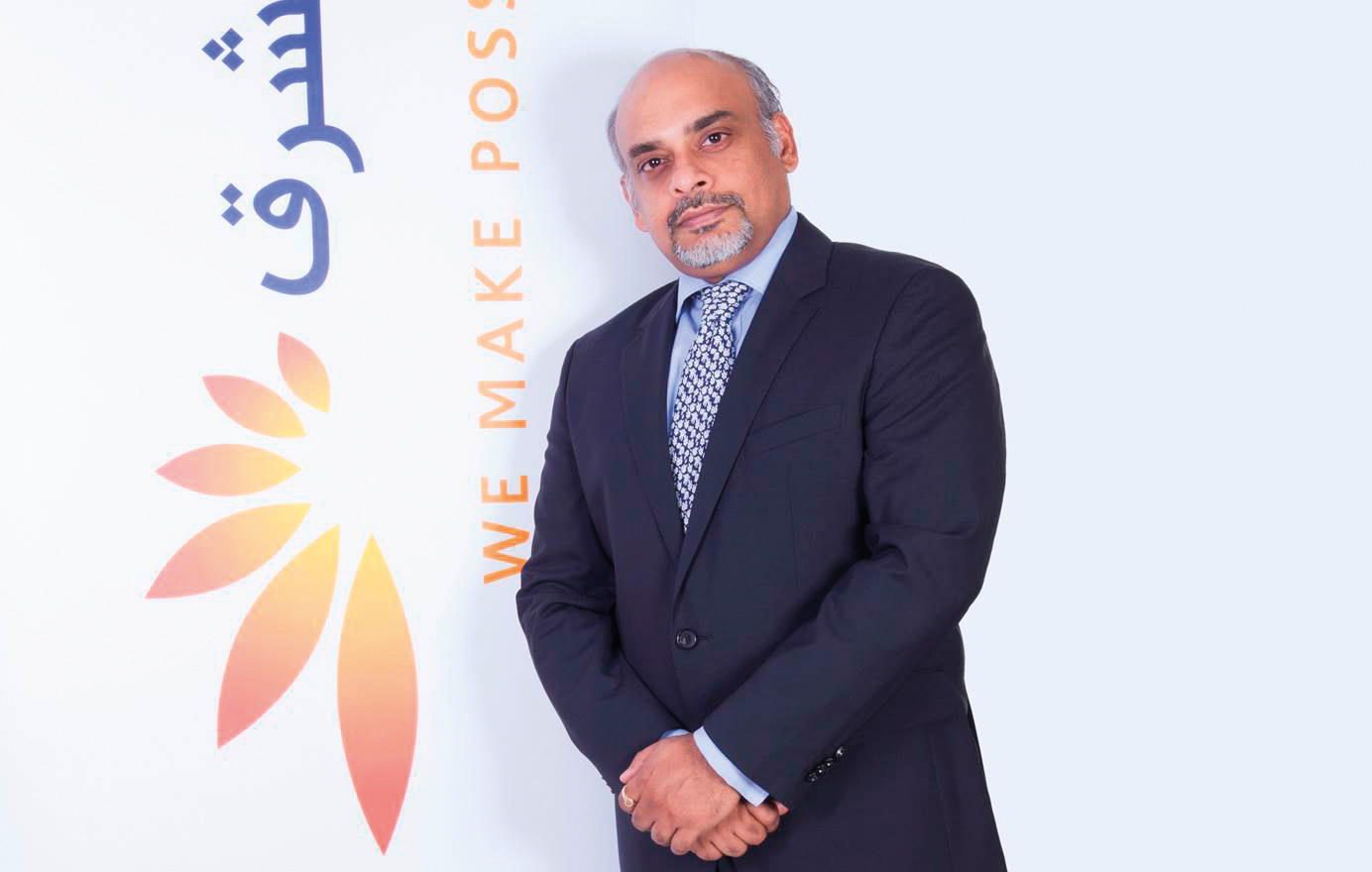
Chiradeep Deb, Managing director and head of corporate finance, Mashreq
Strategic thoughts:
■ Low oil prices continue to squeeze contractor cash flow and banks need tighter due diligence under current scenario to on-lend
■ After a tough period of two years, banks are in a much healthier position
■ There are not enough long-dated assets in the region positioned to attract institutional investors
■ New legislation can be used to open up new pools of long-term funding
What impact have lower oil prices had on corporate finance in the region?
“On government-led project financings, we have moved from a period where budgetary allocations funded infrastructure projects, to a point where governments are asking contractors to bid along with a financing package. It is a 180-degree shift.
“Banks now have to understand more details around the budgetary support that is funding a project. Contractors have to be studied with respect to order book, margins on awarded projects, other liabilities they carry and whether they will be able to sustain themselves if one of their projects does not go to plan. So the onus is on banks more than ever to carry out an in-depth due diligence.”
What issues must you consider when providing finance to a construction contractor?
“Many issues are reviewed before we sign on the dotted line. Paymaster and sponsor risk is paramount, whether it is a government entity or the private sector with a track-record, in order to derive comfort on promptness of payment.
There are a handful of paymasters in each sector and we know the underlying credit profile and payment terms. From a technical stand point, we review the complexity associated with the project along with the potential contractor’s profile. We follow what is going on in the construction sector closely and monitor what is coming, such as order books, cancelled projects and bonds called.”
Are we facing a liquidity shortage?
“The straightforward answer is no. However, the liability mix in the banking system is slated to undergo a shift as the cost of borrowing gradually moves away from a decade of low interest rates. Depositors find it expensive to leave free float around and so banks have to make sure their liability management is more proactive by tapping various liquidity buckets along the curve.
“On the asset side, credit growth has been muted for the past three years, with single-digit year-on-year growth. Banks have continued to recycle their capital. This period has allowed banks to weed out a lot of dead wood in their credit portfolios. Banks are a lot healthier today and ready for the uptick in spending that is foreseen over the next couple of years, especially in the UAE.”
What alternative financing options are available?
“In the past couple of years, project sponsors have directed contractors to bid with project financing packages. But raising finance is a challenge. Contractors’ balance sheets are loaded with contingent liabilities and cash is encumbered by banks in lieu of performance guarantees that are issued. If you load up contractors with debt, you reduce their financial flexibility and over time they will lose ability to bid competitively.
“Some contractors have raised equity through equity markets, but this is the most expensive option. It is better to stay within the debt framework and banks should not be perceived as the only game in town. Other solutions are available. There is a lot of talk in the project finance market about refinancing projects that have reached a certain level of sustainability through capital markets issuances. This releases capital for the banks to deploy. It is difficult for contractors, especially local ones, to raise financing in the capital markets.”
What pools of capital can be tapped?
“There is an opportunity to be innovative in coming up with a financing model in the region that engages institutional investors, such as pension funds and insurance companies in project financing right from the inception of the project.
“The construction phase of a project carries the biggest risk element. Regional banks have the ability and skill-set to assess this risk and are generally comfortable taking on project completion risk, which lasts the construction period. On the other hand, institutional investors have the long-term funding appetite but not necessarily the risk architecture to take on project completion risk.
International banks operating in the region that have technically both – access to long-term funding and project risk management – have significantly dwindled in numbers post financial crisis, forcing stakeholders to innovate.
“The model would entail regional banks providing construction-period guarantees to providers of long-term liquidity – pension funds and insurance companies – from the beginning and, as the projects are completed, the guarantees fall away and the investors continue to benefit from long-term returns on the underlying investment, while the banks move on to manage the next project risk.
“Consequently, the refinancing risk of a completed project is eliminated. This leads to optimal periodic usage of capital for banks and the risk allocation matrix is optimised. It also solves the diversification of asset portfolio for pension funds and insurance companies that have a dearth of long-dated structures with robust cash flows backing them.”
What changes will enable this?
“We need to widen the number of market participants. There have to be laws and regulations put in place to attract the people who naturally possess long-term stable funding.
“A lot of state-owned pension funds and insurance companies outsource their fund management to global securities firms, who invest on their behalf in international securities. If a certain percentage of that is directed to be invested in the local economy and a framework created, it opens up a different pocket of liquidity and will go a long way in establishing sustainable infrastructure spending.”