CONNECT SERIES: A new model for hospitality
On 23 May, Abu Dhabi’s Department of Culture issued guidelines to hotels in the emirate for the reopening of restaurants, bars, beaches, pools and gyms.
The announcement marked the start of a new phase of the Covid-19 crisis and brought welcome relief to hospitality businesses, suffering severe cash flow challenges.
The lockdown measures introduced to prevent the spread of Covid-19 have cut hotel bookings and revenues, and raised fears for business survival across the hospitality sector.
But even before Covid-19, the Gulf’s hoteliers were being challenged by falling revenues, rising costs and an ever growing key count.
Visitor numbers to the region have grown strongly over the past 10 years, and in 2019, visitors to the Middle East accounted for about 7 per cent of all tourists globally, according to data from US consultant HVS. That said, the increases seen in international arrivals has fallen YoY over the past few years.
But despite an increasing number of tourists, revenue per available room (RevPar) and gross operating profit (GOP) has fallen in the region, says HVS president for the Middle East, Asia and South East Asia, Hala Matar Choufany.
Speaking at the Mashreq Real Estate and Hospitality Forum webinar on 20 May, Choufany said: “The declining performance on the top line, and increased cost has left many owners with a lot of pressure on EBIDTA (earnings before interest, taxes, depreciation and amortisation), and as a result, a devaluation of hotel assets.”
“On average in the GCC region we have seen about a 30 per cent decline in hotel values,” said Choufany.
Existing struggles
The problems for the industry began with the drop in oil prices in 2014 and the subsequent freeze in spending by governments in many Gulf countries says Khalid Anib, chief executive officer of Abu Dhabi National Hotels.
This, along with double-digit increases in the number of hospitality assets (key count) in the region, has been disastrous for owners, says Anib.

Abu Dhabi National Hotels estimates an 80 to 90 per cent drop in RevPar for establishments in the second quarter of 2020 but, says Anib, hotel owners still have the same liabilities that include loans interest, staff feeding and accommodation, insurance, maintenance, utilities and capital expenditure for property upkeep.
Even once customers return, he says, the inevitable drop in hotel occupancy and capacity in food and beverage facilities due to safety and social distancing measures will hit revenues.
While the hotel owner is the direct loser, the failure of tourist facilities will have a wider-reaching affect.
“It has a direct impact on the overall economy… especially in Dubai,” says Anib. “Tourism is vital and impacts directly and indirectly lot of other sectors.”
Watch the event highlights video here
Cost control
Anib says that the risk of contagion from a tourism downturn to the wider economy requires governments, operators, banks and investors to work together to control costs and support a more sustainable industry. More regular collaboration is required with all stakeholders involved.
While the hotel owner is the direct loser, the failure of tourist facilities will have a wider-reaching affect.
“We need support from the government, which should not be limited to reduction of taxes or reduction of utilities,” says Anib. “It should really be comprehensive and ensuring that hotel owners remain resilient.”
Anib says that direct support for the region’s hoteliers during the Covid-19 crisis can come in several ways:
-
- Waiver of interest on a current loans
- A new credit line with zero interest
- Waiver of utilities transfers for 2020 at least
- Waiver of districts cooling charges
- Waiver of all taxes, including municipality and VAT
- 50 per cent subsidy towards staff accommodation costs
Back to business
Bringing travelers back to the region is vital to sustaining the hospitality sector, says Choufany.
While outgoings can be reduced to a minimum, hotels will continue to struggle without a return to decent occupancy rates.
HVS recently surveyed a large pool of frequent travelers to establish the factors that influenced their hotel choices.
An overwhelming 85 per cent of respondents said that their decision would relate to how the government in that region has handled the pandemic, and to the safety, security and quality of the medical system.
“This is quite challenging [for hotel owners and operators],” says Choufany. “Because, if I am a great brand, and if I have a beautiful asset in a great location, there is still not much that I can do to really influence the decision.”
“The biggest concerns are health and safety regulations and guest confidence,” says Mark Sawkins, vice president of operations at Accor, one of the biggest hotel operators in the Middle East and North Africa region. “We believe that the brands are going to be playing a major role, but the government is quite important as well in providing that safety.”

To boost customer confidence, Accor has put into place its ‘Allsafe’ label, which ensures that international cleanliness and disease prevention standards are maintained in all of its hotels.
“There is an Allsafe officer at each property to monitor the safety and comfort for the guests without losing the human interaction,” says Sawkins.
Bringing travelers back to the region is vital to sustaining the hospitality sector, says Choufany.
Hotels are introducing safety measures such as contactless service for check in and check out, keyless entry systems and digital menus. Increasing delivery services for food and beverage, while ensuring that social distancing is observed in restaurants and other communal areas will also be key developments.
Sawkins says that Accor is working closely with Dubai Tourism and Commerce Marketing (DTCM) on marketing and awareness campaigns.
“It is very important that the destination stays on top of the mind of travellers in Europe, Africa and the Russian and Ukrainian markets,” says Sawkins.
A model for the future
Hotels in the region have largely retained a traditional model of operation, but the struggling industry will need to evolve to survive, says Alison Grinnell, CEO of Ras al-Khaimah (RAK) Hospitality Holding.
“A hotel still looks very much like a hotel did ten, fifteen, twenty years ago,” says Grinnell. “This now an opportunity to start to really to bring in some more innovative solutions.”
Some of the changes will require collaboration between stakeholders in the industry, says Grinnell. For example, working together to purchase health and safety equipment could drive down the individual costs for each hotel.
“That’s where the power of the government and the big brands can help,” says Grinnell. “They have got the wealth and the headcount behind them to be able to bring in some of these solutions.”

In some parts of the Gulf, governments have paid for equipment such as thermal scanners and sanitation tunnels to ease the financial strain on hotels.
“It is a lot of money for any hotel that is struggling right now,” says Sawkins. “And it is difficult to say to the owner, if you want guests, you [need] to make the expenditure now.”
In some instances, regulatory changes may be required to enable change. For example, while many hotels in Europe and parts of Asia, including luxury brands, have eliminated the reception desk, government restrictions mean that this is not yet possible in many parts of the Gulf, including Dubai.
“If we can put this in place,” says Sawkins,” there will be significant cost savings and it will be seamless for the guests.”
Hotels in the region have largely retained a traditional model of operation, but the struggling industry will need to evolve to survive, says Alison Grinnell
Updating the relationship between hotels and online travel agents (OTAs) is another area of potential reform,
Currently, OTAs and tour operators take sizable commissions for booking hotel rooms. Promoting direct bookings through hotel websites would significantly reduce costs and improve the bottom line for hotels, while at the same time pushing brands online and allow hotels to explore new markets and distribution channels.
There is little doubt that the region’s hospitality sector is facing unprecedented pressure as a result of Covid-19, but there have been underlying issues that have dogged the industry for several years.
The long-term decline in profitability as a result of rising costs and declining levels of spending represents a maturing of the Gulf’s hospitality sector after two decades of stellar growth. This crisis presents an opportunity for the industry to come to together and rethink Gulf hospitality.
“The additional pressure of the Covid-19 crisis will perhaps allow us to act quicker,” says Choufany. “And, perhaps a bit louder.”
Watch the complete webinar here

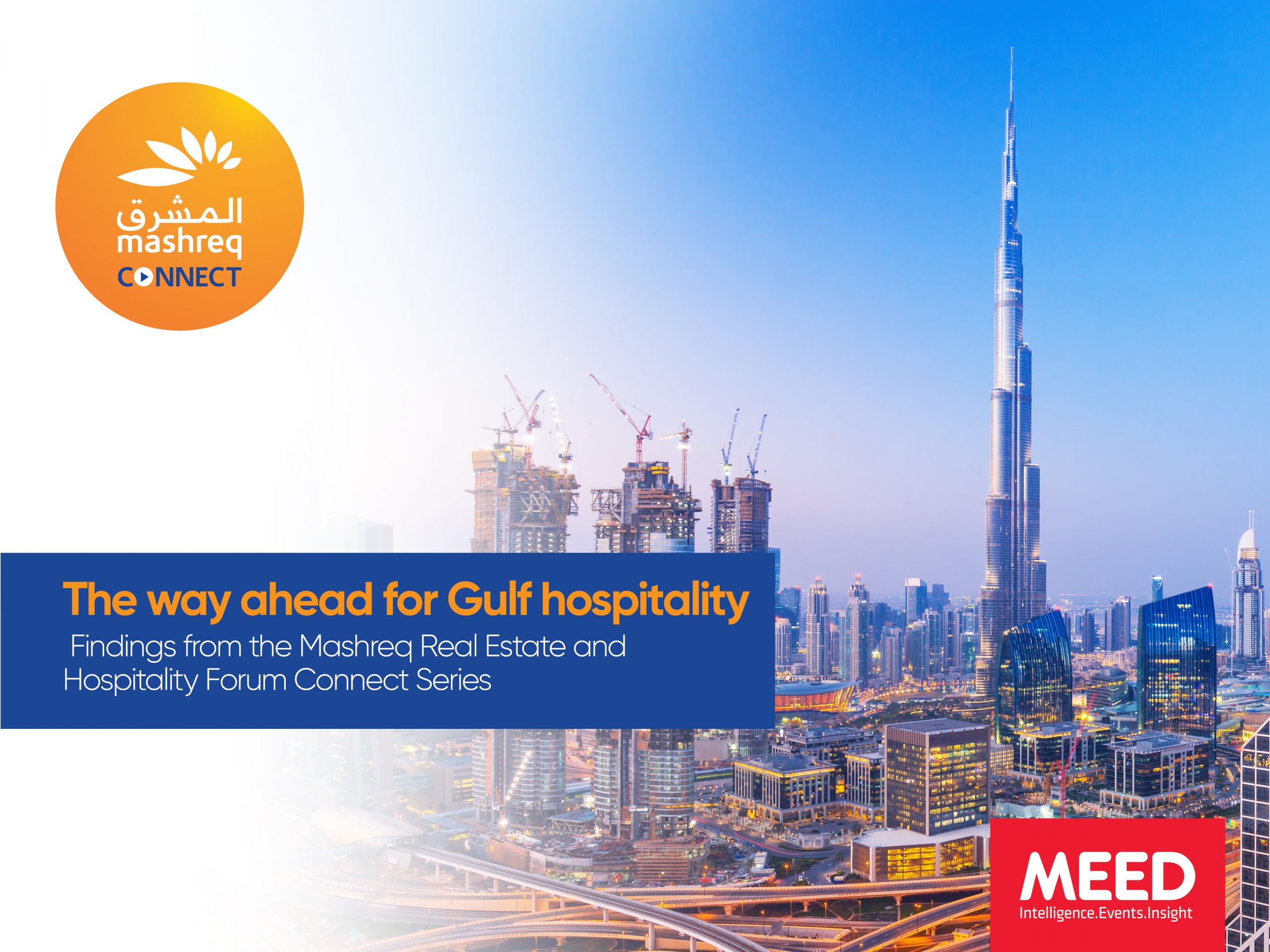
| ‘The Way Ahead for Gulf Hospitality’ is the first webinar in the Mashreq Real Estate and Hospitality Forum Connect Series, examining the pain points facing hotels in the UAE, as well as the steps that can be taken to sustain the industry through the crisis and prepare for what comes next.
Panellists included:
|