Muted projects activity to continue in Mena region
The projects market in the Middle East and North Africa (Mena) region fell for the second year in succession in 2017. According to MEED Projects, the value of contract awards in the region showed a decline of 6 per cent in 2017 compared with the previous year, with $173.7bn of contracts awarded in 2017 compared with $184.8bn in 2016.
At the national level, Egypt, the UAE, Iran, Iraq and Oman recorded sizeable rises in contract awards, offsetting declines in most other markets.
Based on the current pipeline of deals planned to be awarded in 2018, the GCC will continue to provide the lion’s share of activity, with contract awards likely to be about $120bn-$130bn compared with about $50bn-$60bn of awards across the rest of the Mena region. After a challenging year in 2017, contract awards at these levels will represent progress.
Driving this potential improvement in the market are a host of flagship schemes across a range of sectors.

The oil and gas industry will continue its strong activity levels in 2018. Iraq has four megaprojects that are estimated to be worth a total of $17bn and could be awarded over the year, including the $8bn strategic oil export pipeline between Basra and Najaf, the $6bn Nassiriyah integrated refinery package and the $3bn Basra new refinery.
The UAE then has its $3bn offshore crude processing project at the Ruwais refinery and the gas plant package for Adnoc Sour Gas’ Shah development lined up, while Saudi Arabia is set to award the onshore and offshore packages for the Marjan field development project, worth roughly $2bn and $1.5bn respectively.
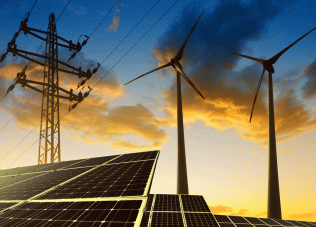
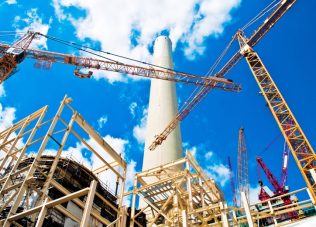
In the power sector, the year should see Egypt award the main contract for its $9bn Hamarawein coal plant, while Saudi Arabia plans to push forward with the procurement for its first nuclear reactor.
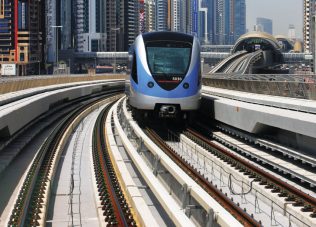
This year should also witness the award of transport deals including the Doha Metro Green Line extension, the Cairo Metro’s Line 4, and the new terminal at Iran’s Imam Khomeini airport.
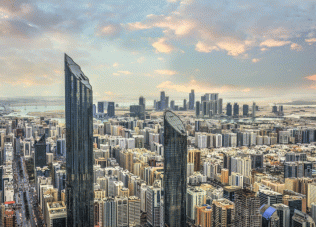
These industry and infrastructure schemes will be accompanied by an array of real estate projects, led by the $5bn Dubai Creek Harbour in the UAE.
GCC slowdown
If anyone had hoped 2016 would mark the lowest point of the GCC projects market, they would have been sorely disappointed by the market’s performance this year. As of 12 December, the value of contract awards in the region during the year was just over $108bn, a figure considerably lower than the previous low mark of $119bn last year, and a world away from the $177bn recorded in 2015.
The projects market has continued to be affected by oil prices that hover around $50 a barrel – a situation that has led to a slowdown in government spending and the launch of new schemes. Although much has been made about private sector participation and public-private partnerships (PPPs), public expenditure remains the primary driver of project activity.
In a year-on-year comparison of the total value of contract awards among the GCC countries, Oman and the UAE saw an increase in the top-line figure in 2017, although with the last month of 2017 still to come, the chance remains that Saudi Arabia might match last year’s numbers. Kuwait, Qatar and Bahrain, on the other hand, are 43 per cent, 34 per cent and 28 per cent lower, respectively, compared with last year.
On the ground, the 40 per cent-plus slowdown in activity has translated into financial losses, staff layoffs and even company closures. In a throwback to the regional real estate crisis of 2009, hundreds of schemes have been put on hold, while dozens of others have been interminably delayed.
On the ground, the 40 per cent-plus slowdown in activity has translated into financial losses, staff layoffs and even company closures. In a throwback to the regional real estate crisis of 2009, hundreds of schemes have been put on hold, while dozens of others have been interminably delayed.


There have been some positive trends. Dubai’s construction market remains remarkably buoyant, shielded from low oil prices by a robust private sector and strong demand from investors for new properties. The power generation and oil and gas sectors have also performed better than in 2016, with the latter seeing the value of work nearly triple year-on-year to almost $24bn.
But for the majority of countries and sectors, the picture has been overwhelmingly negative as the market copes with $100bn-worth of projects fewer over the past two years than the corresponding 2014-15 period. As the region enters a third year of low oil prices, the question is whether the next 12 months will see a recovery in the market, or whether the slump will continue.
Unfortunately, the early signs do not look good. Without an increase in the oil price, government expenditure on projects is not expected to rise. At the same time, efforts to introduce greater private sector participation through PPPs have not really borne fruit, while there are few indicators of an acceleration of activity in recent months. Therefore, the best the market would appear to be able to hope for would be more of the same.
The 2018 forecast by regional projects tracker MEED Projects tends to bear this out. Based on the pipeline of contracts due to be awarded next combined with key macroeconomic data, $132bn of contract awards are expected in the GCC, with a best-case scenario of $175bn and a worst-case scenario of just $89.5bn.
Much will depend on the fortunes of the two largest markets: the UAE and Saudi Arabia. The former has managed to maintain spending in 2017 thanks to a large uplift in projects activity in Dubai. The emirate has buoyed the UAE with a raft of new project announcements and the award of several major schemes throughout the year.
Somewhat paradoxically, it is the city-state’s lack of oil and gas reserves that has enabled it to press on while its neighbours struggle. In the absence of oil-fuelled government largesse, key Dubai developers, including Nakheel, Emaar and Meraas, have relied on alternative revenue streams from their hospitality and retail businesses to grow independently of public spending.
Off-plan sales of properties have been robust, enabling smaller developers to fund schemes, while the 2020 Expo in the emirate has underpinned bullish sentiment in the real estate segment.
Just as critically, Dubai’s leadership has been determined to maintain momentum. The announcement of multibillion-dollar projects through the year – including Dubai Harbour, Marsa al-Arab and the MGM Bellagio resort – has lent assurance to investors that the city remains committed to its long-term vision.
It is a different picture in Saudi Arabia, which remains mired in a long-running projects slump. Although hopes have been raised recently by further economic reforms, the announcement of more PPP projects and the prospect of unexpected revenue from the recent anti-corruption drive, the data suggests such optimism may be premature.
If anything, the market is still slowing. In the first six months of the year, some $15.8bn of deals were let in the kingdom, according to MEED Projects. But in July-November, just $8.1bn of contracts were signed – a drop of almost 50 per cent. Despite having the largest projects pipeline of any GCC state, Saudi Arabia still lacks a projects market system and climate that are dynamic enough to adapt to the current environment.
The same largely holds true for other countries in the region. Private sector confidence and activity remains muted almost everywhere outside Dubai. New tender issuances in Oman, Kuwait and Bahrain are a fraction of what they were two years back, while the impetus of the Fifa 2022 World Cup in Qatar has been offset somewhat by the impact of the embargo imposed on it by the Arab quartet.
Yet despite the gloomy short-term outlook, the long-term drivers of projects activity remain positive. There are still more than $2 trillion of projects in the GCC’s pipeline. On the back of continuing economic and population growth, the need for housing, education, healthcare and utility schemes is as great as ever.
There may be less money around to pay for this investment, but governments cannot afford to fall behind for too long on their social infrastructure programmes. A solution to this challenge will eventually have to be found, and when it does, projects spending will once again climb to historical levels.