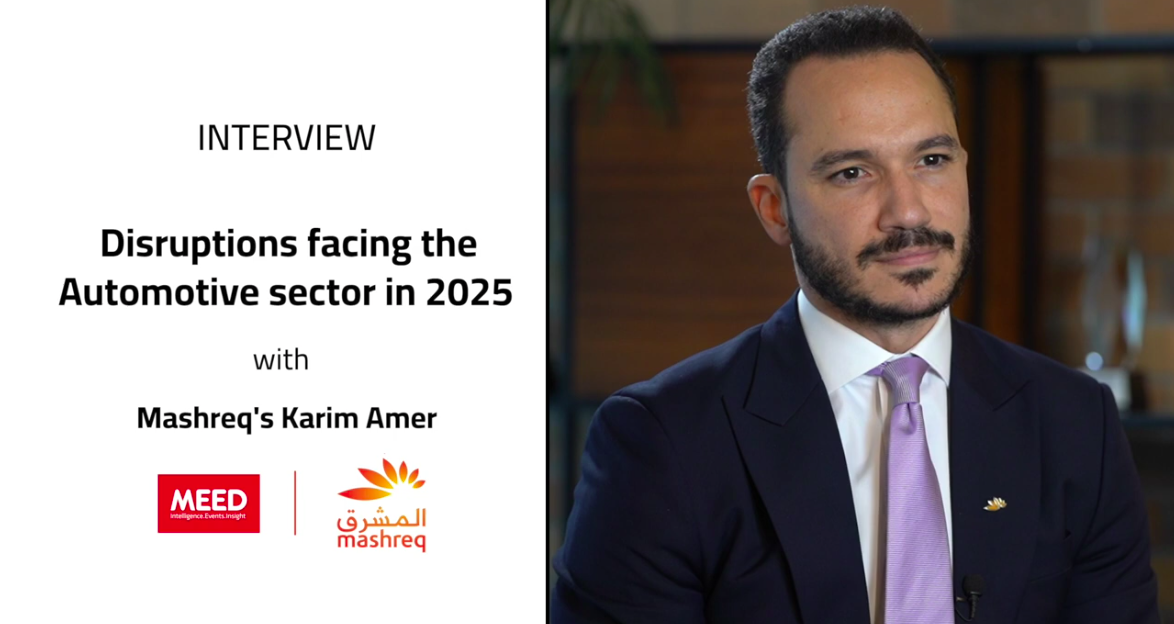
Watch: Global shifts driving the automotive landscape
Karim Amer, senior vice-president, head of automotive, wholesale and trading MNCs at Mashreq, examines how trade pressures, technology transitions and evolving supply chains are redefining regional and global automotive dynamics
The global automotive industry enters 2026 in a period of significant transition. Automakers and suppliers are adapting to rapid technological change, shifting consumer expectations and rising operating costs, all within an environment shaped by inflation, high interest rates and the continued recalibration of supply chains after the pandemic.
Earlier this year, the US announced a new tariff package that has introduced fresh cost pressures across the automotive value chain, contributing to an increasingly complex landscape for manufacturers worldwide.
These tariffs have already generated close to $12bn in losses for global automakers, with industry forecasts indicating a 1.7% contraction in global motor vehicle and parts production in 2025 and 2.1% in 2026 as manufacturers adjust. The impact is particularly pronounced in the US, where import dependence and globally dispersed supply networks heighten exposure to cost fluctuations.
“Automotive supply chains are notoriously complex,” says Karim Amer, senior vice-president, head of automotive, wholesale and trading MNCs at Mashreq. “Vehicles are developed in one country, their components are produced in other countries and they are assembled in a third country.”