Digitising treasury to streamline workflows
Automation, AI and integrated platforms are reshaping cash management, forecasting and control
Corporate treasury has undergone a clear shift in recent years, moving from a transactional back-office activity to a strategic function that influences liquidity decisions, funding structures and long-term planning.
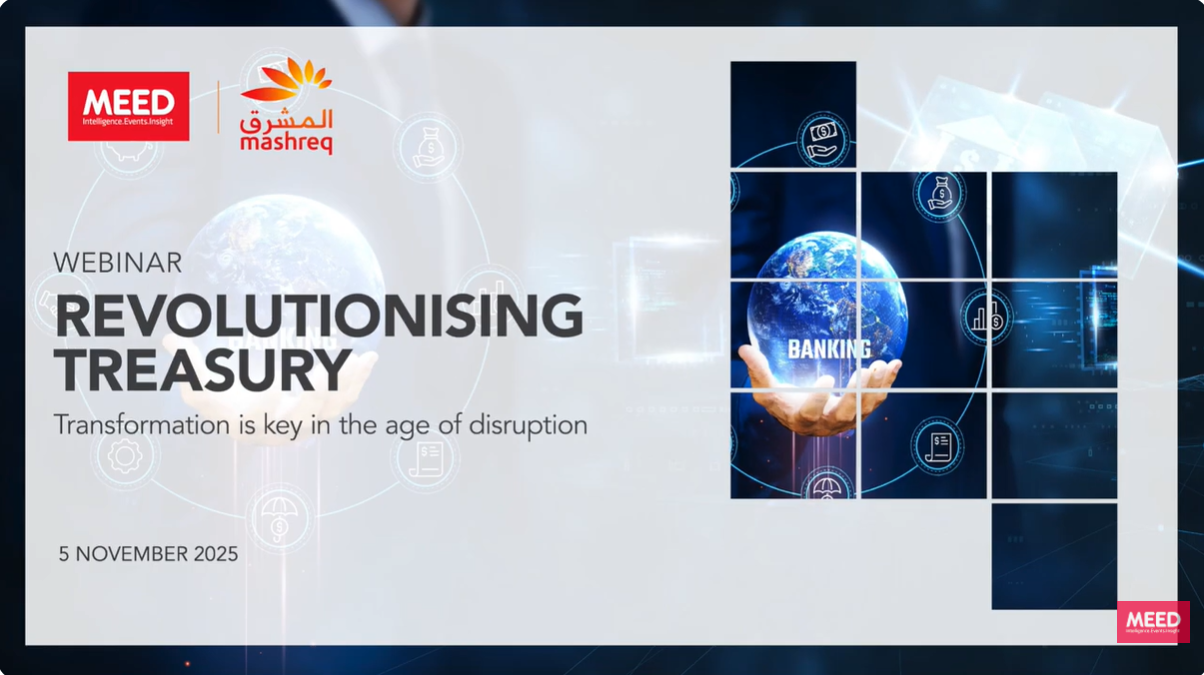
Digitalisation has been central to this transition. Integrated enterprise and treasury management systems have replaced manual spreadsheets and fragmented processes, closing long-standing gaps in visibility, accuracy and control. These themes shaped discussions during a recent webinar held by Mashreq in partnership with MEED, where experts examined how digitalisation, connectivity and collaboration are redefining treasury operations across the UAE and the broader region.
For many treasurers, visibility remains the most immediate priority. Organisations operating across multiple entities, legacy systems or several banking partners often struggle to access real-time information without relying on manual workarounds.
Devendra Kumar, head of channel products for global transaction banking at Mashreq, notes that treasury functions have historically been siloed, reactive, and reliant on legacy connectivity methods such as host-to-host (H2H) integrations or SWIFT-based file transfers. As digitisation accelerates, this operating model is being reshaped, with treasury playing a more central role as data becomes more accessible and systems more interconnected across the enterprise.